The main body of the talk involved gardening on Janey’s allotment but the essence of surviving summer is to plan ahead and start by considering water usage and any possible pest problems. Water evaporates very quickly when a hose is used in the open and watering foliage just encourages weeds and slugs. Water at the base of plants using a watering can where possible. The time of day for watering is also important with early morning being the optimum time. Plants watered in the middle of the day could get scorched leaves and evening watering isn’t the best time for the plants.
Many pests can be avoided by covering plants with fleece or netting. Brassicas only take 12 weeks from seed to harvest but protection with fleece is essential. Onion sets can be started in October or November and raised indoors but again must be protected by fleece when planted out. To combat flea beetles which attack runner beans sow later in mid June to obtain better pods in October.
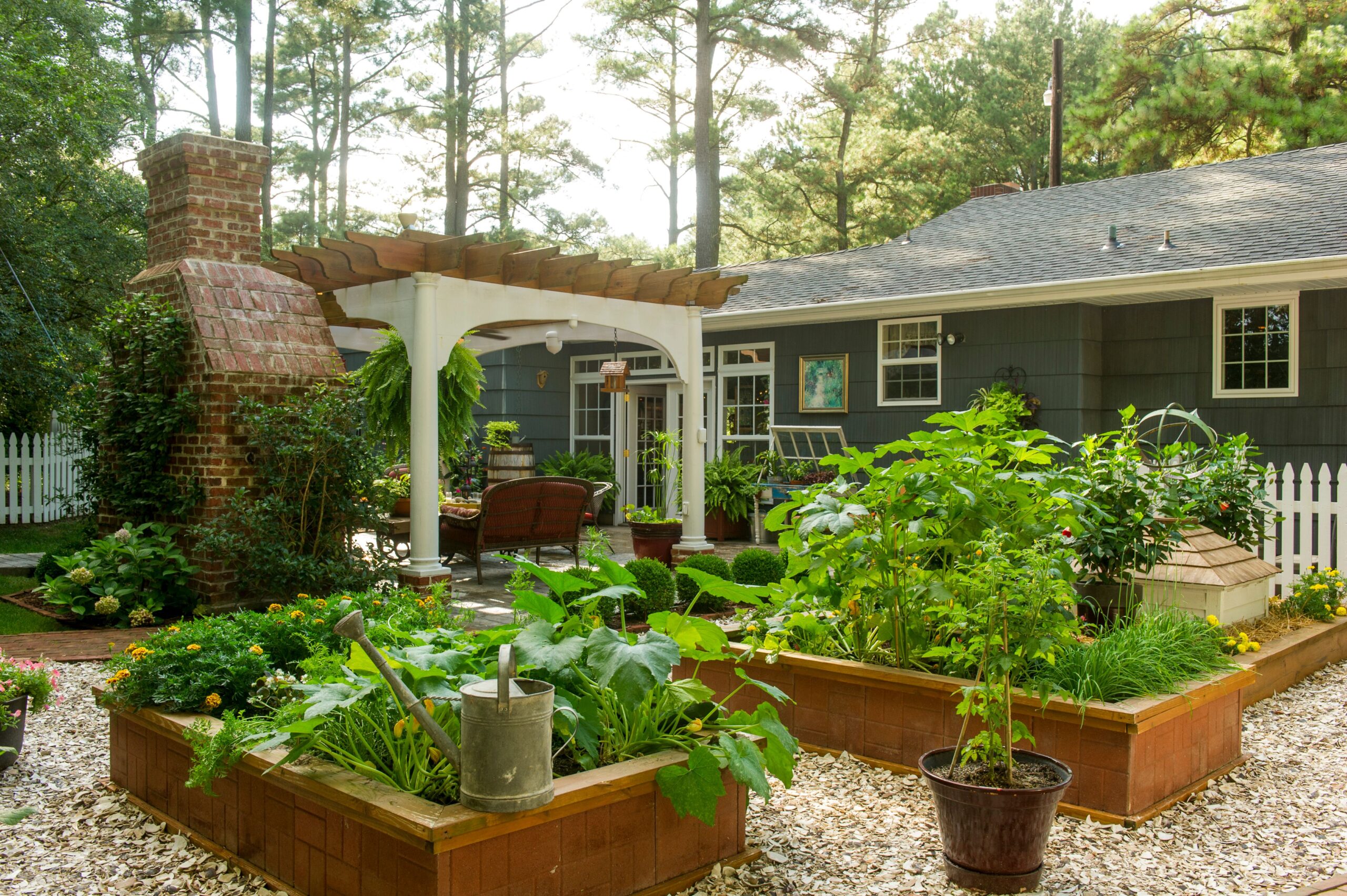
The soil needs to be in the right condition for growing and organic matter is an essential addition when growing on chalk to enable moisture retention. An alternative that can be used in the garden although more commonly on allotments is raised beds. These can be filled with growing medium of choice and ensure that the ground isn’t compacted by footfall. These beds like all other growing medium benefits from the use of the appropriate fertilisers. Weeds can be removed by hand or killed by heat treatment.
Ray’s questions and answers after the talk
Prune Hebe’s in May or June when in full flower. Get rid of ground elder by using a heat gun on the growing tips after strimming. Manure for the garden should be at least a year old and spread loosely around.