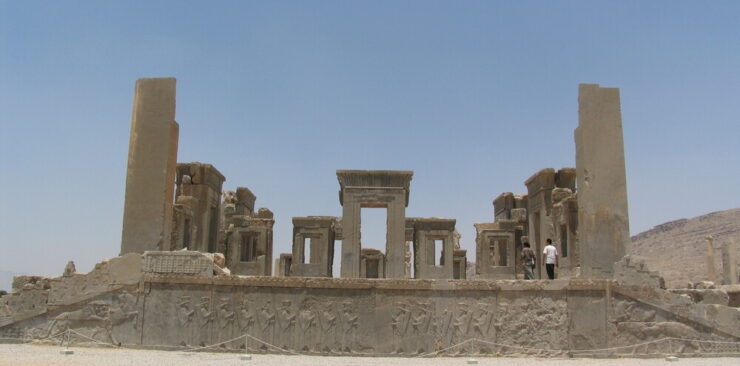
Iran’s long history includes ancient civilizations, the Achaemenid, Parthian, and Sasanian empires, and the eventual Islamic conquest in the 7th century AD. The country’s location on the old silk route between east and west meant that different influences played a part in the habits of the country. The geography includes mountain chains and rivers but parts of the country are arid. The country has been invaded many types by different groups including Mughals, Mongols and Macedonians.
The earliest gardens were established by Cyrus the Great around 500BC. These gardens were characterized by a formal four-part layout (chahar bagh) divided by waterways and canals, utilizing sophisticated irrigation systems like the Anod system to bring water from underground sources. They were symmetrical and are known as Gardens in Fours often with a rill through the centre. These designs can often be seen today in modern Persian carpets. After the death of Cyrus the ruler Darius founded the great garden city of Persepolis which became the ceremonial capital of the Achaemenid Empire. Construction continued under Xerxes before the city was burned by Alexander the Great in 330BC. The ruins are now a UNESCO World Heritage site.
In order to transport the water bridges and causeways were built and major gardens established in various places including Kerman with its garden apartments, Shiraz with multiple large gardens, and Isfahan famous for its grand central square and the Shah Mosque with intricate tilework showing many flowers including Irises, Pansies and Roses.
In modern day Iran the Tabiat Bridge, the largest pedestrian bridge in Iran, connects two parks and has a 3-dimensional truss and tree-like columns. The Islamic influence can be seen at the Alhambra in Spain and at Sezincote House in Gloucestershire.